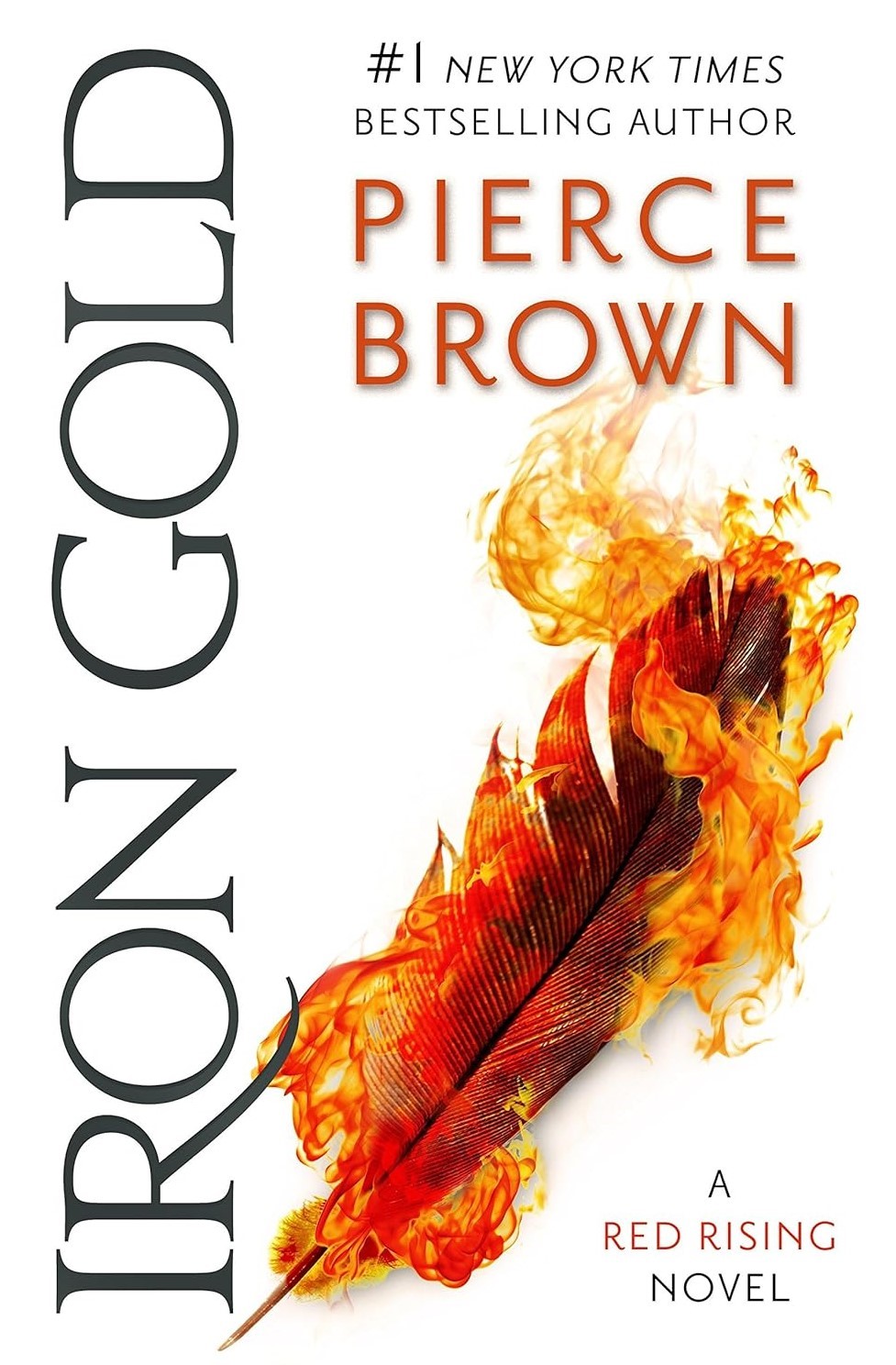
REVIEW of Iron Gold by Pierce Brown: Once More Unto the Breach

All good stories must, as they say, come to an end, and the Red Rising trilogy was an epic story wrapped with a bow. There was no need to continue it. To do so would be to tempt fate. To tip over into excess. To ruin a perfectly good saga.

But who am I kidding? These characters are incredible. As a fan, I wanted more. And what I got with Iron Gold exceeded my expectations. This tale, simply put, is the Star Wars we all deserve—a deeply complex, gripping saga with action, intrigue, drama, and characters who expand the imagination. Through their trials, we get a better understanding of our own strengths, failings, decisions, and desires.

Iron Gold is a front row seat to a solar system still at war. The Red’s revolution didn’t create a utopia, not even close, and Darrow battles an entrenched Gold Core, 10 years after the start of the war.

The ensemble cast has expanded considerably and Pierce Brown does some impressive interweaving of narratives to suck us right back in. Virginia and Darrow must carry the weight of this new Solar Republic, ruling from Luna. The Reaper, once the symbol for freedom across humanity, now must face the consequences of uprooting the Society’s order. Reds suffer and die in shanty towns on the surface of Mars and a tense peace exists with the Rim. The Ash Lord meanwhile holds Venus and Mercury.

Brown has lost none of his bite or imagination. The grand scale of events throughout the solar system show the devastating human cost of conflict, yet again. 

Darrow’s gambit to take Mercury in an Iron Rain pays off, but at a high cost. He is accused of treason when it is revealed he ignored the Ash Lord’s offer of an armistice and talks of peace. 

One of the enduring traits of these stories is the sheer magnitude of what’s at stake. As Darrow sees it, he must sacrifice his own happiness as a husband and father, and if necessary his life, to finish what he has started.

But equally as compelling are the other characters who we follow through the story. Lysander, the boy who was spared when the Lune family reign ended with Octavia, is now a young man with his own destiny beckoning him. He and his protector Cassius are on the fringes of civilization, helping others as they travel the expanses of space. But then they are pulled into a very dangerous game with the Golds of the Rim, a sleeping giant, ready to awaken. 

Then there is Lyria, a Red whose life is crushed beneath the machine of war but then is fated to help save the future of the Republic. Ephraim is a former legionnaire-turned-mercenary who gets in over his head and pays a heavy cost. Lyria’s and Ephraim’s stories are intertwined and their choices show the tragic failings of even the best-intentioned people. 

With big action sequences, political intrigue, and emotional notes all hitting their mark, Brown has crafted yet another tale worthy of the name of Red Rising.

He dives deep into the weight of war, and how rebuilding a society might take many lifetimes. Darrow has paid a high price, not being the father he wants to be and, as he is grimly reminded, “death begets death begets death.”

In Iron Gold, Darrow and the Howlers have some new insane stunts they pull off — a prison jailbreak under the ocean, aligning with an unstable enemy to bring down the Ash Lord, and attacking an island citadel with slim numbers and slimmer chances — all while cracking jokes, which is what Howlers do.

There’s much to love in this tale, and also much to fear for these people. The course of human destiny is in disarray, and not even the fates can tell what awaits on the other side of this Vale.

5/5 stars

-josh

REVIEW of Tiger Chair by Max Brooks: The Fog of War

Soldiers are familiar with the term “fog of war,” where chaos and uncertainty on the battlefield can cause even more casualties. But there’s another meaning in this short story, deftly written by author Max Brooks (who also penned World War Z). The fog of war here also represents the narrator’s cloud of doubt about the necessity of fighting and if we can really understand the true cost of armed conflict to society.

Soldiers who have seen firsthand the destruction of human life, freedom, and dignity because of war are closest to understanding matters of sacrifice and duty. It’s appropriate then that Tiger Chair’s narrator is a soldier, and what he has experienced in war–the cost on both sides–makes him not only question its necessity, but its limitation in achieving any real stability and control. 

By the end of these 50 pages, there is much to dissect about Tiger Chair, which seems just this side of plausible. The themes are universal and Brooks taps into a scenario that would shake any generation. 

Tiger Chair is a short story, but it packs the weight of a novel. I personally go into a story “cold” and ignore the description, but that payoff is huge when the story genuinely surprises.

Tiger Chair is surprising in a number of ways. Without spoiling details, the story is able to connect at the personal level first, then expand outward, showing from the narrator’s point of view a major armed conflict. This war is fought–like any war–with people, information, and technology. It shows the unpredictability of occupying captured territory, the wider information campaigns to win public sentiment, and how technology is not always the deciding factor. The latter, which examines some plausible computing technology used in modern warfare, was actually some of the most eye-opening parts of the story, I thought.

I also enjoyed where the story touched on how the occupying government tried to apply pressure on celebrities to align their social media with official government messages and squash dissent. That was a pretty chilling part.

Writing about war should, by necessity, focus on its destruction. Ignoring that reality is ignoring basic human decency. Brooks writes battle scenes that work as standalone records of death, but also are important to understanding the lessons war should teach those on and off the front lines. 

What does it mean to be a patriot? How long do you commit to carrying on killing to achieve an end goal? These are tough topics, and Brooks does not shy away from dealing with them. He actually provides an answer through the narrator’s decision about his own role. It’s a powerful endnote to a story that examines very real, and very hard realities that any country and generation at war must face.

5/5 stars

-Josh

REVIEW of Beacon 23 by Hugh Howey: On the Fringes

No one can hear you scream in space, unless you type in all CAPS, then they probably get the point. 

This short read is riveting in its portrayal of a war vet on the edge of space, happy to be far from humanity and human contact. He’s a beacon operator, an outerspace lighthouse keeper of sorts, helping interstellar traffic avoid cosmic collisions and stay on course. 

He’s wrestling with a lot of demons (of the internal variety), bumps in the night, and questions about the meaning of his life. 

I will admit that listening to the audiobook, read by Peter Ganim, added to the immersion and my curiosity about this man’s life. It was an absolutely hilarious, moving, and heartfelt audio reading. It gave the unnamed narrator power and life, and added a necessary weight to a man contemplating his life’s choices. 

Which leads to Beacon 23 itself. Without spoiling the plot, there’s a lot here in this trim, fully realized vision of coming to terms with your life choices. I’d recommend reading this book for what it is, and take in the exploits imagined in this future. The atmospheric details give the reader just enough to understand the world and make the reader fill in the gaps. You’re almost like the narrator in a sense, not dwelling too much beyond what’s in front of you.

The book has a helluva climax. Beacon 23 is partly a meditative examination of roads taken and not taken, with a seemingly impossible final choice to make. All roads have led the beacon operator to this single moment. As a story of one person on the edge of the universe and what that would look like, Beacon 23 works well. But as a story about facing consequences, examining your life head-on, and finding courage in impossible circumstances, it’s simply brilliant.

4 of 5 stars

-Josh

SPOILERS:

The narrator is plagued by the death he saw in war and there was no way he could imagine it would follow him to the furthest reaches of known space. But isn’t that always the case? Nothing is untouched by war.

The third act brings the entire story together, and what a finale. One man must decide the fate of humankind’s largest war machine, and it’s a decision of whether to commit a small genocide or a larger genocide, a choice that impacts humans and aliens alike.

I hand it to Howey–he had me guessing right up to the end. Factoring in the girl and the question of whether or not everything going on was real or imagined, it seemed almost too much to bear such a decision. But the narrator pieced enough of his reality together to realize this was not some psychological break, but a horrific truth–that an interstellar resistance had come to his doorstep and was relying on him to decide the fate of worlds. It was gutwrenching to read about the decision laid at his feet.

It’s the kind of ending that makes for the best argument about the power of storytelling and the written word.

REVIEW of ‘Golden Son’ by Pierce Brown: Blazing Battles, Gutsy Gambits, and a Killer Climax

Yes, there’s high-octane action, and I feel like I’m one Darrow’s Howlers, loud and loyal, and itching to take down my enemies. This book hits the right notes as a commercial success, but there’s something deeper here, more primal, and undeniably powerful in the story and the decisions of its characters that decide the fates of worlds.

The narrative takes the approach of moving quickly from one major moment to the next in the unfolding revolution, but it maximizes each fateful encounter and nails the intensity of all the insane gambits and political machinations. These Golds rule with absolute impunity and when the tale begins Darrow has lived for four years perfecting his disguise among his enemies.

His extended band of loyal Golds include some new and fun additions–Victra and Ragnar as standouts–and when the original band is brought back together, author Pierce Brown does not waste the opportunity to build their parts in this world and how their fates intersect with Darrow’s.

Darrow is a compelling and conflicted protagonist and in stepping into his shoes you get a sense of the weight that he carries. The personal and societal developments deliver in a harrowing third act. But I’m getting ahead of myself…

Virginia de Augustus is Darrow’s anchor in his tortured reality among the Golds, and I think the book handles his inner struggle authentically as he tries to reconcile his love for a woman who is, for all intents and purposes, the enemy. As a fan, I hoped that there wouldn’t be any contrived, simple solutions in their relationship, and I wasn’t disappointed. The relationship reflects reality and the effort it takes to build trust in someone who you want to build a life with.

The story’s action deserves a dedicated standalone section. Even with the fast-paced encounters in the book, each one advances the story with a feel of distinct cinematic events. The action complements the personal story like a perfectly fitted glove and makes for a complete experience.

This is book two of a series. The story ends in a climax, and wow, it is a banger. It’s a testament to the writer that I had a physical reaction to the ending. Screaming wasn’t involved, more like stunned silence and immediate panic that the fates of the worlds are indeed up for grabs.

I plan to add to this review to break down some of the plot elements, so it will be a “spoiler section.” I’ve started it below, and it will expand. For me, remembering the details of what I loved about the story is important, so I’ll likely be including these at the end of my reviews.

Until next time, my goodman, don’t get bloodydamn complacent. No one is safe in the Society.

-Josh

SPOILERS:

Darrow makes a fateful choice

Like all good heroes must do, Darrow must decide what kind of man he wants to become, and in his path to revolution, he can become an extremist, or something else. He makes a fateful choice when he finds out his deceased wife was pregnant. It breaks him (and me if I’m being quite honest. Damn tears are coming right now just thinking about it.). He solidifies his quest for vengeance and decides to plant a bomb at a Luna event and effectively wipe out the Gold ruling class, the Peerless Scarred.

But then something happens. He alters course and makes a harder choice along a longer and more perilous path. He decides to incite civil war among the Golds, and how he does it is a rousing, movie-worthy spectacle of calling out his archenemy to a Razor duel. These razors are swords that can turn into deadly whips, making it a versatile weapon. His opponent Cassius has few equals and Darrow looks like he’s signing his own death warrant, never having mastered the art of the Razor.

It’s a satisfying bait-and-switch, because in his four years in Society, Darrow studied the Razor in secret with a master, Lorn au Arcos, aka the Rage Knight. The ensuing confrontation is reminiscent of the duel at the end of Dune. Kingdoms are at stake here. This is when the adrenaline started pumping and never really quit. What a fight!

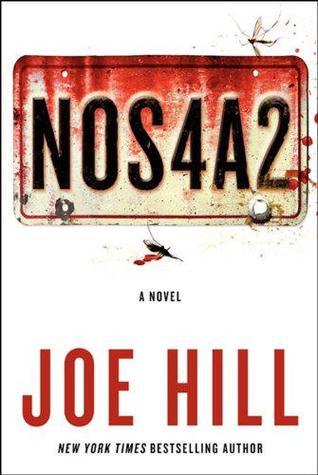
REVIEW of ‘NOS4A2’ by Joe Hill: A Survivor Forced into Action Against a Villain Destroying Lives to Extend His Own

You can’t ask for much more in a novel; fully realized and flawed characters, a vivid world, action that builds in a believable and satisfying way, and an incredible narrative that takes the reader on a rollercoaster (Sleighcoaster?) ride.

Stories that matter are the ones that stick with you, and this one most certainly does. This tale packs a surprising amount of life lessons alongside the madness and mayhem. Vic McQueen, Maggie Leigh, and Lou Carmody are the types of characters whose struggles, hopes, and triumphs you remember—they don’t simply slip away when you’ve turned that final page.

The characters are what I appreciated most about the story. Author Joe Hill is the son of Stephen King, and the family legacy is alive and well here in the immersive and authentic way he breathes life into the people. No trauma is left behind: Almost died as a kid? Had your family torn apart? Watched a guy burn to death? It happens to Vic, the lead protagonist, and the consequences are long-term.

Just to get one thing out of the way—NOS4A2 is not a vampire story, not really. The title points to the clever vanity license plate on the villain’s 1938 Rolls-Royce Wraith. And OK, yes, Charlie Manx (said villain) is a kind of vampire: throughout his long and unnatural life, Manx uses a power to take the lifeforce of kids. He promises they’re going to a better and safer place, Christmasland, but they are never heard from again. It’s Manx’s twisted way to justify pursuing his own immortality, among other goals.

The author makes it so that Manx keeps his hands clean of any vicious acts. The darkest parts of the book are saved for the depravity of the Gasmask Man, who does Manx’s dirty work in disposing of the parents in horrific fashion.

Hill is disciplined in building out a world with rules. I won’t spoil the big concept, but it’s a really intriguing good versus evil plot that plays out in very unexpected ways. The novel stands as an exemplar of first-rate fiction because of the characters, of course, and how the “big concept” manifests itself all the way to the blazing end. The heart and heroine of the tale is Vic, but the supporting cast is wicked good.

Rarely have I empathized as much with a character as I do with Vic McQueen. The reader shares moments of her childhood that define her, as well as the strange events that will ultimately create an inner conflict within her throughout her life. Completely relatable.

If I had to describe this book to someone, I would say it’s about a real person living in a fantasy scape. What is reality and how stable is it really? Are you crazy, or is everyone else? The resulting turmoil defines Vic’s life and has far-flung consequences. Vic uses sheer willpower and an inner courage to selflessly make the only decision a mother would for her family. A Triumph indeed. 5 of 5 stars.

FAVORITE PLOT SPOILER 👇 (look away!)…

My goodness. My breath was caught over three chapters as Hill agonizingly set up a Game of Thrones-style exit for a main character. When the hammer landed, I felt like the character, paralyzed, looking at my own death. It was the definition of nail-biting. The one hope to stop Manx laid bloodied and broken on the ground. This was where Vic showed her grit and fate was locked.

Lou saved his love with the biker jacket. The hammer that was meant to break Vic’s bones only broke the plates in the jacket. Her helmet saved her too. I really thought we had us an Ed Stark situation. Hat tip to Hill for the amazing scene.

He outdid himself with the ending too. Christmasland is turned into The White and the Lou saves Wayne my smashing his ornament in the trees at the Sleighouse. RIP, Vic.

-josh

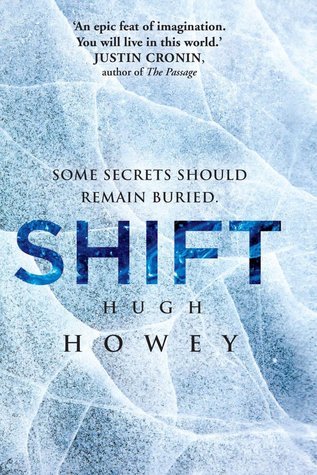
REVIEW of Shift by Hugh Howey: Lifetime(s) of Regret

The second book of the Silo series, Shift, is aptly named, and it subverts expectations with a, uuuumm, shift in the story–one that deftly expands on the world.

In broad, non-spoiler terms, it explores big questions such as: how does a closed-loop society operate? What could go wrong? How did we get there? Who’s really in charge? Howey decides to tackle these and other sticky issues in book 2. It’s a bold move that works incredibly well, creating a memorable allegory of how ultimate power does indeed corrupt. 

The story gets major bonus points in how it handles “survivor’s guilt,” not shying away from the messy trauma. It examines the moral fiber of a society that attempts to outrun ethics and replace the human soul with technology (figuratively speaking).

Focusing on some established characters and introducing major new ones, the narrative centers on the unfolding end of the world and those who inherit the new one.

Yes, it’s a survival story about individuals. But equally necessary is the expansive society-building in book 2. The revelations sink in over the course of the tale, and at some points I wanted to curl up on the floor of the silo and cry, just like Donald. My favorite parts ultimately are about the characters who are complicit in undoing the world. Understanding how “it” happened in the first place becomes a very compelling part of the story. 

I left like a resident of the silo when reading Shift. There’s so much that we don’t know, aren’t allowed to ask, and is ultimately out of reach. But what we do learn about our friends closes an emotional loop from book 1 that’s incredibly satisfying. I didn’t know I needed that closure, and when it came, there was this flood of emotion that just hit me.

Thanks to Howey for tackling the big questions, providing an impressive world expansion, and setting up the tale for what I hope is a firecracker of an ending in book 3.

4 of 5

-Josh

SPOILERS:

Family Legacy

There’s sacrifice and bravery in these stories. There are the obvious heroes, but there’s also an equal number of those with quiet courage and fortitude. One of the most emotional moments early on from book 1 is when Allie goes out to “clean”. Once the reader understands the magnitude of this decision, the weight of it is almost too much to bear. It’s disorienting to find out that this society subdues unrest by exiling, and thereby executing, citizens who simply say they want to leave the silo.  

Howey writes a beautiful story of a couple in book 2 whose courage shows through during an uprising that almost forces Silo 1 to shut down Silo 18 (aka kill everyone). We find out this is an earlier generation of Silo 18, the forebearers to Juliette’s generation that averted a total loss of life. And when we last see them, the wife is pregnant. The husband, Mission, a former porter, and his wife Allie, decide to give their baby girl the name of Allison, which has been in her family for generations. This unborn Allie is the very same woman who we meet years later right before her death in an act of defiance like her parents. I think I shed a tear.

Time

There’s lots of time-jumping in this book. It’s an effective technique to show the plausibility of the Silo 1 generation, who lived before the fall, managing all the other silos. There is a slow erasure of all their collective pasts, either done chemically or by law, and it’s really interesting to see what effect that has on the human psyche. 

I believed the struggle Donald was doing through and I felt for his plight. He lost his wife, who lived out her natural life only one silo over. He lost his humanity as time went on. He was as much in the dark as everyone else, but now, at the end, he has a decision to make. Does he become the monster Thurman was, or find a different way forward for humanity’s future? It might not be up to him if Juliette has any say!

REVIEW of Wool by Hugh Howey: A Finite Future

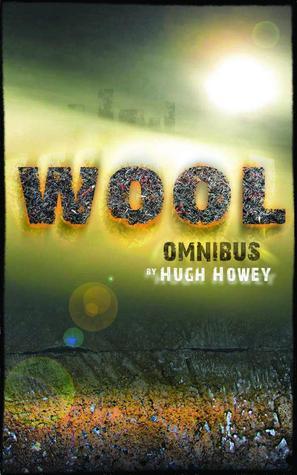
Everything is not as it seems. That’s a central thread that carries the novel Wool by Hugh Howey from the opening scene through to the very end. This is a highly polished and self-contained dystopian tale, where the characters’ peril is omnipresent because of the confines of the space and the powerful forces that are stacked against them.

What I didn’t expect was the emotional rollercoaster ride the story took me on. No one is safe in the Silo, and that point is driven home by the constant surprises the story delivers. The story had me rooting for the underdogs, only to have hope ripped away in bruising, and sometimes irrevocable, fashion. There are influences here that I would attribute to other popular stories with ensemble casts and big stakes. But this story feels wholly original in some key aspects of the dystopian genre. Find out in the spoiler section below.

It also taps into a central requirement for the best fiction – it makes you care, and care deeply. I was rooting for the main characters every chapter and wondering what sacrifices would be enough, from any one person or the collective whole, to ensure the survival of their tiny town underground.

This story is set on keeping secrets in a place where one slip of the tongue could prove fatal, on a societal level. It’s high fun and has a thrilling pace. Not knowing who at any point will disrupt the delicate balance, you’re always guessing about the ultimate outcome. The protagonists make the world feel real and lived in. Nothing is taken for granted, from the materials manufactured to the energy it takes to climb the stairs. It’s great character drama and thought-provoking end-of-the-world fiction. I highly recommend.

5 of 5 stars

SPOILERS:

What makes Wool unique?

For one, the “cleaning” is simply an expelled tribe member wiping the camera lens to the outside world so those below can see if things have gotten any better, and presumably make it easier on the claustrophobic. The first person the reader sees break the cardinal rule of saying they want to go outside is the sheriff’s wife, Allison. It’s an absolutely heartbreaking moment in the cafeteria of level one, where the reader is still not quite sure what the big deal is, but, oh yes, it’s the biggest deal. Allison has just signed her own death warrant and not even the sheriff can stop it. It’s utterly gripping character drama. I will admit that watching the TV adaptation of the book brings all of this to life in brilliant and chilling fashion.

There’s a bait and switch that got me good: the characters I’m invested in and who have the most power are quickly dispatched in the beginning. Mayor Jahn’s is a figure I wasn’t entirely sure wasn’t corrupt, but her inner monologue made me realize she’s a fairly honest civil servant who sees the potential end of her whole society if she can’t install the right successors in the sheriff’s and mayor’s offices.

I love the conceit of a society living in a 148-story subterranean town with loosely implied (and explicit) social stratifications between the up top, mids, and down deep. And the only way to travel is by the central staircase. It’s so cool to see that society come to life, especially in the TV adaptation, which really nails a distinct look and feel, including the farms, and other wider open spaces.

Knox! They killed Knox, and Mark and many others in the deep down. Lucas has to come to grips with killing and deputy Peter Billings has to really recognize his place in the present (and history) at the end of the story in either letting the lie continue or becoming a man of conviction. I love this character in the show, where he has much more of a story.

Juliette is a bad ass. Pure and simple. She is stoic in the face of near certain death, unflinching in her will to survive, and brave beyond words in going back to where it all started, with slim odds that her life will continue past the events rising like a tide against her. I’m a big fan.

‘Hench’ is Tough on Heroes and Tougher on the Bad Guys

49867430

Hench by Natalie Zina Walschots is confident in its conviction that bad guys can do good by being bad, and it achieves a rare feat – it makes superhero fiction fresh again. It starts light and breezy, and its delicious set up – where the bad guys’ minions (aka henches) are the stars – hits on all cylinders the whole way through. It’s quite the achievement in an oversaturated genre where superheroes are a dime a dozen. The henches live a precarious life being in the line of fire and one hench’s experience with the novel’s superman creates a ripple effect that changes everything. The story becomes a serious take on the consequences of heroism and the collateral damage and years of livelihood lost by those affected by circumstances outside their control.

The heroes are recognizable archetypes, but the villains are the ones with extraordinary depth and pathos. The book attempts to be a cultural touchstone, sensitive to today’s issues but never beating the reader over the head. I love its sensibility, nuance, and sheer swagger in bringing this world to life.

There were no missteps for me, and whenever I thought the concept for the book might be a novelty that would wear itself out, another layer is revealed. This happens over and over and draws you in.

Walschots invests a lot in her main character Anna and it pays off in dividends – Anna goes from being a casual baddy on the fringes to having a house right in the heart of Wickedville. I haven’t had this much fun with or affection for a character in a while. Anna feels like one of those characters who comes to life on the page with very little effort. One of the biggest achievements of the book is believing the danger and the fear and doubt that plagues Anna and her resolve to overcome it.

I love the novel’s sensibility, nuance, and sheer swagger in bringing this world to life.

I have to think the author is paying homage to one of sci-fi’s greatest baddies (Scorpious from Farscape) with her own memorable antagonist Leviathan. Anna’s relationship with him is what anchors and elevates the book to more than just another story told from the bad guy point of view. The tale gets stronger as it goes along because there’s a level of deception and brokenness in the world of heroes that only the villains seem to understand, and that is what motivates the ‘best’ of the baddies – to expose the hypocrisy and sham that the heroes represent.

Hench achieves automatic geek status with the book’s single pop culture reference when evoking sci-fi TV classic Farscape directly. It helps us understand exactly the danger Anna is facing as a mere mortal in this world of terrestrial gods and how far she’s come in this tale to believe in something so much that she would die for it. Anna quotes Farscape’s D’Argo as she goes to face her doom: Fear accompanies the possibility of death. Calm shepherds its certainty.

Hench is a nuanced look at the relationships we choose to foster, circumstances that force us to take action, and the consequences we must face when the reaper comes to collect his debt.

The ending is superb and the characters, just like the reader, are left to decide what toll they are willing to pay in the never ending fight between good and evil.

– JP

The Road review: Bleak, Depressing, and Utterly Devoid of Hope — How the End of the World Really Looks

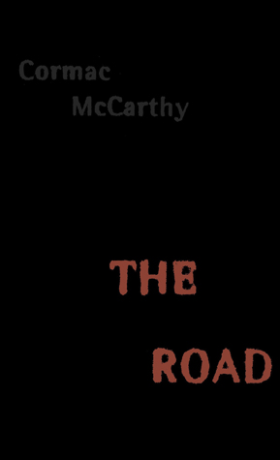
The 2006 Pulitzer-prize winning novel “The Road” by Cormac McCarthy is bleak, by any standard of the definition. If you want a glimpse of what the post-apocalypse really looks like, you’ll find it here. The story focuses on one man and his child wandering on a road south to escape the cold in a gray ruined world with a sky that never shows the sun or stops raining ash.

The world that once was will never be again. In the aftermath of the apocalypse there is no wildlife at all, and humanity is slowly nearing extinction as cannibalism becomes the norm. Those few details exist to let you know how hopeless the world is, but the central struggle is a father trying to keep his son alive and to find some meaning beyond the stretch of road he can see in front of him.

I would contend that this is the alpha of post-apocalyptic novels. There’s no respite from the natural elements and human dangers in a world that’s edging to oblivion.

There were few nights lying in the dark that he did not envy the dead.

The story puts the reader right into its world. One example is the bitter relentless cold. I can remember back more than a decade to a nighttime Army exercise in winter with “cold to crack the stones,” to borrow a phrase from McCarthy. I can’t imagine living day-to-day not being able to get warm and being perpetually miserable.

They went on. Treading the dead world under like rats on a wheel. The nights dead still and deader black. So cold.

There’s a moral compass that the father tries to stay true to, and it’s his son that likely keeps him from giving in completely or to his darker nature.

What makes this book rise above others of similar ilk is the relationship and the conversations that the boy and his father have. What they talk about and how sparse their conversations are hit exactly the right tone for this world. There’s not much to talk about and they have very little energy to do it. The story is pure in the sense of a father and boy being able to rely on each other and live only for each other, and that in itself has some haunting beauty, despite the father knowing that they are on borrowed time.

Then there’s the gallows humor:

What’s the bravest thing you ever did?
He spat into the road a bloody phlegm.

Getting up this morning, he said.
Really?
No. Dont listen to me. Come on, let’s go.

Every decision they make means life or death. Living that way for years on end would tear down even the most resilient of people. The father desperately needs to get his son to the coast, someplace warmer, but then what next? That’s a question he himself does not have an answer to. Don’t expect a traditional narrative arc where you’re given the answers at the end. I think the story, at least for me, is part fiction and part study for reflecting on your values.

The frailty of everything revealed at last. Old and troubling issues resolved into nothingness and night.

I learned a lot from “The Road” — examining more closely what I have in life, the resilience of the human spirit, the fragility of the world, putting relationships first, and not giving in to your darker self, to name a few.

The novel is bleak, depressing, and utterly devoid of hope, but that’s what the end of the world really looks like.

5 of 5 stars

-Josh

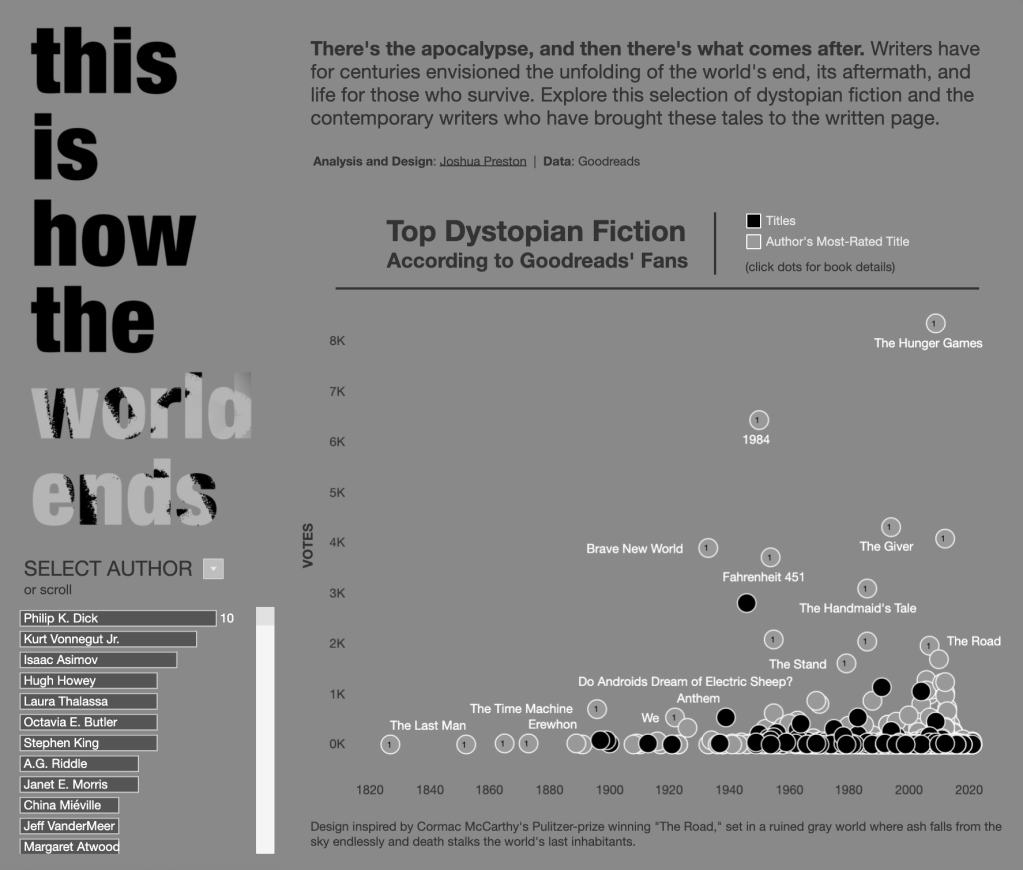
p.s. I did an analysis of votes by Goodreads’ fans for top dystopian fiction by creating an interactive graphic. Design inspired by “The Road.” Check it out.

Paul Tremblay is at the Top of the Horror Heap for a Reason | Survivor Song Review

Survivor Song

One of my standing rules when writing book reviews is no spoilers up front. Half the garbage on the Internet launches right into telling you what the book is about. If it’s not in the description, I don’t wanna hear it. Survivor Song by Paul Tremblay might be the exception to this rule. But let me at least try the traditional spoiler-free approach first:

I went into this book knowing exactly zero about what it was about. (I didn’t even read the description). I just heard Paul Tremblay was at the top of the horror heap, so I said “why not?” I was not disappointed.

This is a story about an epidemic, potentially world-ending stuff in the form of a virus left unchecked. With all the chaos, no one knows what it is. Zombie invasion, biological warfare, super rabies? But what caught me almost right away was this feeling that this…could…really…happen.

It didn’t feel like a piece of fiction where I was safe to observe. Putting myself in the characters shoes terrified me because the story was just this side of plausible.

The author was stingy with details, and it served to create this uneasy feeling where, as with the characters, you don’t have a complete picture of what’s going on. The wave of internet noise and news reports starts to cause more chaos and despair, accelerating the decline of civil order.

This story made me feel connected to other people and more empathetic, which might be one requisite for success. I think a more important achievement is that it brings together many lessons we could learn in our current pandemic with COVID-19.

SPOILERS

There is tremendous loss throughout this story, and it doesn’t feel like characters, but rather actual people who are dying. It was a bit hard to read it in that regard. But at first, with no idea what I was getting into and dutifully plugging through the opening scene with pregnant wife Natalie waiting for her husband Paul, it was a bit of a yawner. I thought these were the extras about to die horribly to establish how scary things are before moving on to the main characters. My expectations were immediately flipped on their head and we find Natalie — who in fact loses her husband from a man-gone-mad biting and bludgeoning him to death — driving frantically through Boston to find her best friend, who happens to be a doctor. Natalie has been bitten and needs help before she becomes a rabbid mindless vegetable. The atmosphere feels authentically creepy because what we’re dealing with is a super rabies and the city is essentially infested with rabbid mammals of all kinds that succumb to the disease within hours.

There are parallels to the current COVID-19 crisis but it could also be a timeless story about certain groups of people who are in denial about the scale of the crisis or conspiracy theories running rampant and the breakdown in the system, whether it’s government services or social order. And you ultimately see, like in any situation where fear and chaos rule, people die unnecessarily. So there’s that subtext, but it doesn’t beat you over the head or get in the way of the narrative focus, which is the relationships and encounters in the journey.

Many characters in the book think that this is the end. A real zombie invasion. Or a deep state government conspiracy to release a virus and then make money off the vaccine. Take your pick.  While some kids think they’re fighting zombies and go looking for trouble, you have rational adults trying to reason with them and let them know that things will be OK. There’s a lot packed into the relationships between the two sets of best friends who meet up (the two adolescent boys and Doctor “Rams” and Natalie ). I love the kids because they’re dropping pop culture references and movie quotes and it’s just hilarious to see how they basically, like all youth, think that they’re young and indestructible. They reference zombie movies and the tropes in the genre, notably how the heroes come across random people or “randos” who eventually die. It’s a bit of clever foreshadowing about the boys, who think they’re the heroes, but who ultimately don’t make it. Their demise is a particularly somber section of the story.

The quartet comes across an animal control posse that basically is looking to kill all the pets in the neighborhood, and that goes horribly wrong. This is when one of the boys gets bit by a relentless coyote that tracked Rams and Natalie in the ambulance. Rams has to get Natalie to a safe hospital to deliver the baby, and they part ways with the youth, who go into the woods and accept their fate, with the healthy boy choosing to share the same end as his friend. They battle wild rabbid animals and when the infected friend attacks, the other boy chooses to evade and not fight him. In the end they both go quietly into the night.

So the women’s relationship and the realization that Natalie won’t make it takes on this urgency as they focus on making sure Natalie’s baby has a fighting chance at life. Natalie tries to hang onto this fragile hope of having a child, knowing full well that she will herself die. She begs Rams, who doesn’t want a child even of her own, to promise to be the baby’s caregiver.

In keeping with the book’s you-feel-like-you’re-there feeling, at the very end when Rams has to somehow subdue Natalie, who has “turned,” it’s truly a tragic and arresting experience that will define the rest of Rams’ life. The actual medical procedure of a C-section to try to get the baby out alive is told with great detail so you feel like a doctor who has a person’s life in your hands. It’s a visceral experience and a climax that effectively caps what has become an emotionally draining experience for Rams and the reader. Kudos to Tremblay for this final nailbiter sequence. The baby isn’t breathing when the doctor finally delivers the child, and it’s not until 10 years later in the fast forward epilogue that you find out that little Lily did make it and Rams has tried to honor her friend’s request by raising the daughter.

I loved this apocalypse/not-apocalypse tale. The fact it was written during a real-life pandemic helped me experience it through a different, more empathetic lens. It’s a tightly written, emotionally anchored read that shows you the human side to pandemics and perhaps reminds us to never forget what we’re really fighting for. 4 of 5 stars

-Josh