
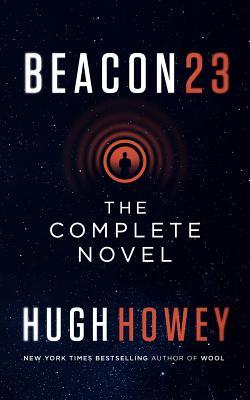
No one can hear you scream in space, unless you type in all CAPS, then they probably get the point.
This short read is riveting in its portrayal of a war vet on the edge of space, happy to be far from humanity and human contact. He’s a beacon operator, an outerspace lighthouse keeper of sorts, helping interstellar traffic avoid cosmic collisions and stay on course.
He’s wrestling with a lot of demons (of the internal variety), bumps in the night, and questions about the meaning of his life.
I will admit that listening to the audiobook, read by Peter Ganim, added to the immersion and my curiosity about this man’s life. It was an absolutely hilarious, moving, and heartfelt audio reading. It gave the unnamed narrator power and life, and added a necessary weight to a man contemplating his life’s choices.
Which leads to Beacon 23 itself. Without spoiling the plot, there’s a lot here in this trim, fully realized vision of coming to terms with your life choices. I’d recommend reading this book for what it is, and take in the exploits imagined in this future. The atmospheric details give the reader just enough to understand the world and make the reader fill in the gaps. You’re almost like the narrator in a sense, not dwelling too much beyond what’s in front of you.
The book has a helluva climax. Beacon 23 is partly a meditative examination of roads taken and not taken, with a seemingly impossible final choice to make. All roads have led the beacon operator to this single moment. As a story of one person on the edge of the universe and what that would look like, Beacon 23 works well. But as a story about facing consequences, examining your life head-on, and finding courage in impossible circumstances, it’s simply brilliant.
4 of 5 stars
-Josh
SPOILERS:
The narrator is plagued by the death he saw in war and there was no way he could imagine it would follow him to the furthest reaches of known space. But isn’t that always the case? Nothing is untouched by war.
The third act brings the entire story together, and what a finale. One man must decide the fate of humankind’s largest war machine, and it’s a decision of whether to commit a small genocide or a larger genocide, a choice that impacts humans and aliens alike.
I hand it to Howey–he had me guessing right up to the end. Factoring in the girl and the question of whether or not everything going on was real or imagined, it seemed almost too much to bear such a decision. But the narrator pieced enough of his reality together to realize this was not some psychological break, but a horrific truth–that an interstellar resistance had come to his doorstep and was relying on him to decide the fate of worlds. It was gutwrenching to read about the decision laid at his feet.
It’s the kind of ending that makes for the best argument about the power of storytelling and the written word.
 REIGN of Books